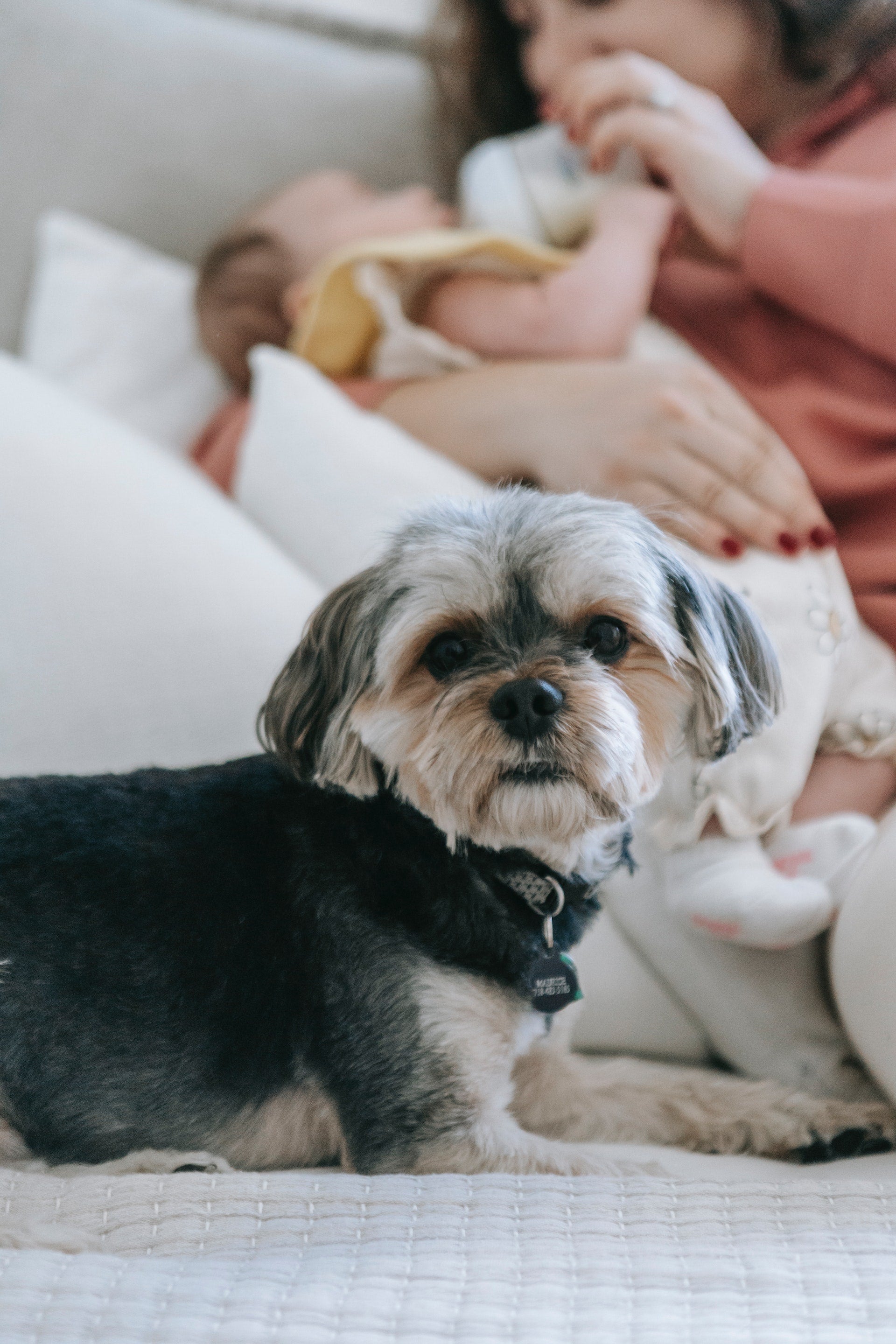




Some fur babies need a full bath. Others just need the mud off their paws.
Ask five dog parents how often they bathe their dogs and you would probably get five different answers.
Once a week.
Once a month.
Only after they jump in rain puddles or roll in mud.
The answer depends on what kind of fur baby you have.
Their breed, coat type, skin, daily activities and where they spend most of their time all matter.
A dog that is highly active and frequently outside will usually need a different routine from a dog that spends most of the week indoors in an apartment.
Some breeds also have thinner or more delicate skin, while others have thick double coats, longer fur or coats that need more regular maintenance.
If you also have a cat at home, their routine can be completely different too.
So, there is not one fixed bath schedule for all. Let’s take a look at what your pet actually needs.
So, how often should you bathe a dog?
There is no one answer that works for every dog.
Veterinary guidance from Washington State University College of Veterinary Medicine explains that how often you bathe your dog depends on things like breed, fur length, activity level and any health conditions.
That is why it helps to look at your dog’s actual routine.
A dog that spends weekends hiking, swimming or running through mud will need more cleaning than a dog that mainly goes on short walks around the neighbourhood.
Breed also matters.
A long-haired dog can pick up leaves, dirt and knots throughout the coat. Double-coated breeds often need more brushing between baths. Dogs with thinner or more sensitive skin may also need a gentler routine and more carefully chosen products.
The main thing is not to copy someone else’s bath schedule just because it works for their dog.
What about apartment dogs?
Apartment dogs still get dirty. It just happens in different ways.
Their paws pick up dust, dirt and residue from pavements, lifts, communal areas and daily walks.
If they are mostly indoors, they may not need a full bath as often as a very active outdoor dog.
Sometimes the paws need cleaning.
Sometimes the belly needs a wipe.
Sometimes the coat needs a no-rinse waterless shampoo.
Sometimes a quick brush takes care of it.
And what about active dogs?
Active dogs naturally bring more of the outdoors home with them.
Mud.
Grass.
Sand.
Rainwater.
Seawater.
Dust.
And whatever else they have managed to find interesting enough to rummage in.
If your dog spends a lot of time outside, goes hiking, swims regularly or plays in particularly muddy areas, they may need more frequent cleaning.
It is also important to look at where the mess actually is.
If it is only the paws and lower legs, clean those areas first before deciding whether your pet needs a full bath.
Start with their coat type
 Coat types can make a big difference on how often a dog needs a proper wash.
Long-haired dogs can collect dirt and little knots more easily, especially around the legs, belly and tail.
Dogs with thick or double coats often need regular brushing to remove loose fur and anything trapped underneath.
Short-haired dogs still benefit from regular brushing to help remove dust, loose fur and everyday debris from the coat. Their grooming routine may be a little simpler than for long-haired dogs, but they can still need a full bath after a muddy day outside.
The same applies to short-haired cats. Regular brushing can help lift loose fur and dust from the coat, even when they are doing plenty of their own grooming.
And for breeds with thinner or more sensitive skin, the products you use are just as important as how often you use them.
Before deciding it is bath time, take a proper look at your furry friend’s coat.
And what about cats?
Cats are a different story.
Most healthy cats spend a lot of time grooming themselves and usually do not need regular baths.
Texas A&M Veterinary Medicine notes that most cats do not need regular baths, but some may need extra help if they are especially dirty or have difficulty grooming because of age, weight, or another medical condition.
Long-haired cats may also need a little more help depending on their coat and routine. Some are messy eaters, for example, and food can get caught around the chest, neck or face. A quick wipe may not always be enough.
In these cases, giving a bath can be useful alongside regular brushing and spot cleaning.
For many cats, it depends on how well they are able to keep their own coat clean and whether they need a bit of extra help from you.
Sometimes a good brush is enough
 Not every dirty-looking coat needs shampoo.
Dry mud, loose fur, leaves and bits of grass can often be easily brushed straight out.
Our Everyday Brush is useful after walks, especially for dogs with longer coats or fur that picks up debris easily.
For cats, regular brushing can also help remove loose fur and keep the coat in better condition between their own grooming sessions.
So if the mess is sitting on top of the coat, start with brushing.
You may save yourself — and your bathroom — a full bath.
Muddy paws do not always need a full wash
 Sometimes your fur baby is clean.
But their paws are not.
A little rainwater or dirt around the feet, lower legs or belly does not need to become a head-to-tail wash every time.
For quick clean-ups, Plume Care’s Gentle Cleansing Wet Wipes for Dogs & Cats are handy for paws and smaller areas after walks.
If more of the coat needs freshening, our No-Rinse Waterless Shampoo gives you another option between full baths.
This can be useful for active dogs, apartment dogs and cats that need help cleaning one area without doing a full wash.
Our Plume Care family also talked about this in Why Gentle Pet Skincare Matters — clean what actually needs cleaning.
When it is bath time, choose a pet-specific shampoo
How often you bathe your pet is only half of the question.
What you use matters too.
Dog and cat skin are not the same as human skin, so don’t reach for your own shampoo.
You can read more about this in Why NOT to Use Human Shampoos on Your Dog.
And if you have both dogs and cats at home, it is vital to check that the shampoo has actually been made for both species.
Read our article Can Dogs and Cats Use the Same Shampoo? to learn more about this and top tips.
Different fur babies may need different shampoos
Not every bath has to look the same.
Plume Care has different shampoo options depending on your pet’s skin, coat and what you want to achieve from the wash.
Honey Oat Damask Rose
 Our Honey Oat Damask Rose 2-in-1 Pet Shampoo is made for both dogs and cats and is suitable for all skin types, including sensitive skin.
It gently cleanses while helping hydrate and support the skin barrier.
Included in the formula are:
-
Coco-glucoside, an ultra-mild cleanser derived from coconut and fruit sugar.
-
Oat extract, which helps support hydration and the skin barrier.
-
Honey extract, included for its moisturising and soothing properties.
-
Aloe vera and cucumber extract, which help soothe and hydrate.
-
Vitamin B5, which helps moisturise the skin and coat.
Fragrance Free
Prefer a fragrance-free option for your furry friend? Our Fragrance Free Shampoo for Sensitive Skin gives you another choice within our Plume Care range.
This can be useful for pet parents who want to keep the grooming routine simple and fragrance-free.
Lavender
Our Lavender Shampoo is another gentle cleansing option with a light scent.
For dogs that find bath time a little stressful, the scent of lavender may also help create a more calming environment. Veterinary guidance notes that lavender scent may help promote calm in some dogs during stressful situations.
The right choice depends on your pet’s skin, coat and routine.
Making the most of bath time
When a full bath is needed, be sure to wet the coat properly first.
Before applying the shampoo through the coat, add a little water and work it between your hands or onto a bath tool to create a lather. This means working the shampoo until it becomes foamy and starts to form bubbles.
A good lather can help spread the shampoo more evenly through the fur, but some gentle formulas may naturally produce less foam.
|
Top Tip: More bubbles do not necessarily mean better cleaning. The amount of foam a shampoo creates depends on the formula, so a lower-foaming shampoo can still clean a coat effectively. |
Massage the shampoo through the fur and down towards the skin, while keeping it away from the eyes and inner ears.
Our Bath Brush can help distribute the shampoo through the coat while loosening grime, loose fur and debris.
Rinse thoroughly to make sure no product is left sitting in the coat, as leftover shampoo can lead to residue and build-up.
For cats that do need a bath, keep the session as calm and short as possible. Cats that are not used to bathing can find it stressful, so a full wash is best kept for when it is actually needed.
Can you bathe a dog too often?
Yes. Some dogs can be bathed weekly, as long as the shampoo is suitable for frequent use and their skin responds well.
How often your dog should be bathed depends on their skin, coat, lifestyle and how often they actually need cleaning.
Our Plume Care veterinary dermatologist also advises that the shampoo you use makes a big difference, especially if your fur baby is bathed more regularly.
A well-formulated shampoo should cleanse effectively without leaving the skin and coat feeling stripped or dry. That is why our shampoos are designed to be used as often as your fur baby needs them, including weekly where suitable for their skin and routine.
For fur babies with dry-prone or sensitive skin, it can also help to build extra hydration into the routine. After bathing, a leave-on hydrating mist can help add moisture back to the skin and coat without needing to be rinsed out.
If your dog’s skin starts looking dry, flaky, red or uncomfortable, speak with your vet about how often they should be bathed and whether their current routine is working well for them.
Bathing dogs with sensitive skin
Sensitive skin can change how often a dog needs a full bath.
Some pets may do better with fewer washes, especially if their skin tends to become dry or irritated easily.
Others may have a diagnosed skin condition that needs more frequent bathing or a specific product recommended by their vet.
The important thing is understanding why their skin is reacting and adjusting the routine around that.
If your dog or cat has ongoing itching, redness, hair loss, sores or noticeable changes to the coat, it is worth checking with your vet before changing how often you bathe them.
After the bath
Once the shampoo is rinsed out — and your bathroom has survived the inevitable doggy shake down — it’s time to look after their coat.
Give the fur a brush through where needed.
Our Plume Care veterinary dermatologist recommends adding a leave-on hydrating mist after bathing, even if your fur baby’s skin or coat does not feel particularly dry.
Our Soft Cloud Baby Lavender Hydrating Mist is designed to hydrate and nourish the skin and coat, while also helping to untangle the fur. It can be particularly useful before blow-drying.
|
Top Tip: Dryers should always be used carefully and without excessive heat, as too much heat can irritate the skin. A hydrating mist adds an extra layer of moisture to the skin and coat as part of the post-bath routine. |
Spray it onto the fur and brush it through to help distribute the product evenly.
For smaller dry areas, our Hydrating & Soothing Cream for Paws, Elbows & Nose gives you a more targeted option for areas that need a little extra attention.
Keeping fur clean between baths
Not every clean-up needs to happen in the shower or bathtub.
In between washes you can:
-
spot clean smaller areas
-
use waterless shampoo when more of the coat needs freshening
-
check for tangles and mats
-
add hydration where needed
-
moisturise dry paws, elbows or noses separately
This gives you more options depending on what actually needs cleaning.
A dirty paw after a walk may only need a wipe, while a coat that has picked up more mess might benefit from waterless shampoo or a proper bath.
Building a simple grooming routine
If you are putting together a grooming routine from scratch, Plume Care has also put together bundles to simplify your everyday needs.
Our Bath Ritual Set brings together bath-time products, while the Daily Soothe, Clean & Protect Set and After Walkie Routine Set tackle more of the jobs that come up between baths.
And with Christmas just around the corner, we’ve made gifting a little easier too. Our Christmas Gift Sets bring together some of our everyday care favourites in thoughtfully curated seasonal sets for fur babies (and pet parents) on your gifting list.
We’ve made it easier for you to choose products based on your fur baby’s routine, whether that means regular bath time, muddy-paw clean-ups after a walk or a little everyday skin and coat care.
So, when does your pet actually need a bath?
For dogs, there is no one-size-fits-all answer. How often they need a bath depends on things like their breed, coat type, skin, activity level and where they spend most of their time.
A dog that spends its days running around outdoors, swimming or finding every puddle in sight will probably need more frequent cleaning than one that is mostly indoors.
For cats, regular brushing and their own grooming routine will usually take care of most everyday coat maintenance, so baths can be saved for when they are actually needed.
And for both dogs and cats, not every mess calls for a full bath. Sometimes a quick brush, wipe or spot clean is more than enough.
Sometimes it is shampoo.
Sometimes it is the brush.
And sometimes, it really is just the paws.
FAQs
How often should I bathe my dog?
There is no single schedule that works for every dog.
Washington State University College of Veterinary Medicine notes that bathing frequency depends on things like breed, fur length, activity level and health conditions.
So, if your dog spends a lot of time outdoors, swims regularly or somehow always comes home dirty, they may need bathing more often than a dog that spends most of the week indoors.
The best routine is the one that suits your dog’s skin, coat and lifestyle.
How often should I bathe my cat?
Most healthy cats do not need regular baths because they already spend plenty of time grooming themselves.
A bath may be helpful if your cat gets especially dirty, has difficulty grooming properly or needs some extra help because of their weight, mobility or a medical condition.
For everyday upkeep, brushing is usually the better place to start.
Should dogs with sensitive skin be bathed less often?
It depends on your dog and what their skin needs.
Some dogs with sensitive or dry-prone skin may do better with fewer full baths, particularly if frequent washing leaves their skin feeling dry or irritated.
Others may need more regular bathing as part of a routine recommended by their vet for a diagnosed skin condition.
If your dog’s skin stays itchy, red, flaky or uncomfortable, speak with your vet about how often they should be bathed and which products are best suited to their skin.
Can dogs and cats use the same shampoo?
Yes, as long as the shampoo has been specifically formulated for both dogs and cats.
We made our Honey Oat Damask Rose 2-in-1 Shampoo for both species, and it is suitable for all skin types, including sensitive skin.
That means one bottle can work across a multi-pet household without you needing separate shampoos for everyone.
What can I use between baths?
For smaller everyday messes, a brush, wipe or quick spot clean may be all you need.
If more of the coat needs freshening, a pet-specific no-rinse waterless shampoo can help you clean things up without turning it into another full bath.
For cats, regular brushing will often cover most everyday grooming needs unless they are particularly dirty or need some extra help keeping their coat clean.
The aim is not to bathe more often than necessary — it is to use the right kind of clean-up for the mess in front of you.